When the Wheels Wobble: Fear, Thought, and the Freedom to Let Go
For a long time—and sometimes still—fear showed up for me every day. Not the healthy, built‑in reflex that yanks your hand away from a hot stove, but the kind that spins stories about the future and tries to make sense of a past that won’t sit still. It felt like riding a bicycle with the wheels out of alignment: the faster I pushed, the more the wobble threatened to throw me.
What changed everything for me was a simple understanding from the Three Principles (Mind, Consciousness, Thought):
- Mind is the deeper intelligence of life, the energy behind everything.
- Thought is the creative brush that paints our moment‑to‑moment experience.
- Consciousness is the screen on which that painting appears.
Seen this way, fear is not a prophecy about what’s coming. It’s the felt quality of the thoughts currently on the screen. That doesn’t trivialize fear—it humanizes it. Fear becomes information, not a life sentence.
For years I believed I had to control my thoughts—upgrade them, manage them, out‑think them. But no one I’ve met, including me, can control thought on command for more than a few seconds. Trying to do so is a full‑time job with terrible benefits. Fortunately, you don’t need that job.
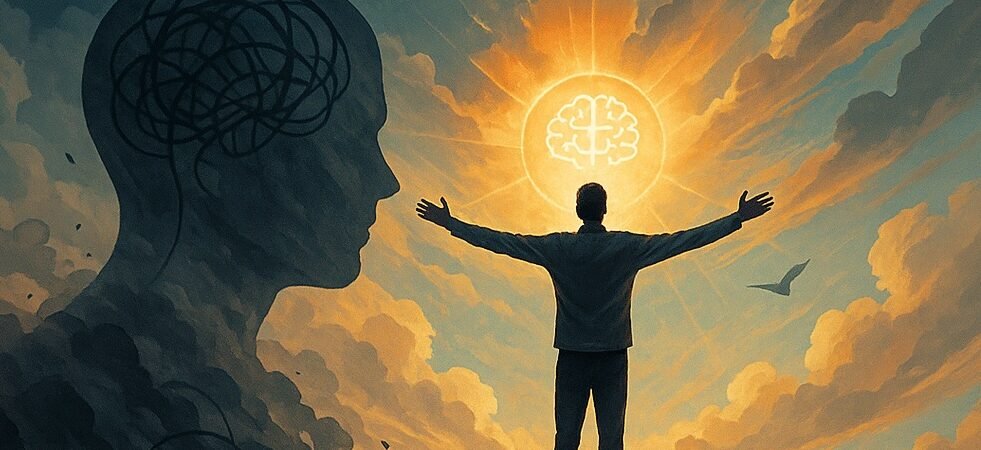
Here’s the pivotal shift: you don’t have to take every thought seriously. Thoughts come and go. You are not your thoughts; you’re the one aware of them. The feeling is real, but the meaning is optional.
Two metaphors help me:
- Birds in the sky. Your mind is the sky; thoughts are birds flying through. You don’t have to label, chase, or catch each bird. Let them pass. The sky doesn’t struggle to be sky.
- The elevator lobby. Imagine a building with countless elevators labeled with different thought‑streams—“What if I fail?”, “They don’t like me”, “I’m not enough.” You can step into any elevator and be carried up or down. Or you can stay in the lobby, let the doors open and close, and wait until wisdom suggests the right ride—or a walk outside.
When fear surges, the system is doing exactly what it does when agitated thought is on the screen. Nothing is broken. The wobble isn’t a verdict on your future; it’s simply feedback about the current alignment: I’m feeling my thinking right now. Seen in that light, the compulsion to fix the future softens. Space appears. In that space, fresh thought arrives on its own—because that’s what minds do when we stop wrestling them.
This isn’t a technique; it’s a recognition. Control and suppression belong to the old paradigm. The new one is quieter and more reliable: notice, allow, and let Thought change itself. As your relationship with thought shifts from obedience to observation, your experience shifts from panic to possibility. You respond to life instead of reacting to your own commentary about life.
So next time fear arrives:
- Name it kindly. “This is the feeling of thought.”
- Look to the lobby. You don’t have to board the first elevator that dings.
- Wait for wisdom. New thought will show up—unforced, often obvious in hindsight.
Freedom isn’t in perfecting the future. It’s in seeing the nature of experience now. The wheels steady not because you tightened every bolt, but because you realized the wobble was feedback, not fate. And from that steadiness, you ride on.